Overview
In the Philippines, payroll is commonly processed on a semi-monthly basis, where employees are paid twice within a pay month.
Companies can also configure when statutory deductions for SSS, PhilHealth, and Pag-IBIG should be applied during the month. Each statutory contribution can be deducted during the First Half, Second Half, or across Both Halves.
TABLE OF CONTENTS
- How do I configure my company's statutory deductions schedule?
- How does First Half deduction work?
- How does Second Half deduction work? (Recommended)
- Why is Second Half generally more accurate for statutory deductions?
- How does Both Halves — Split Equally work?
- How does Both Halves — Based on Each Pay Run's Salary work?
- When can Statutory Deduction settings be changed?
How do I configure my company's statutory deductions schedule?
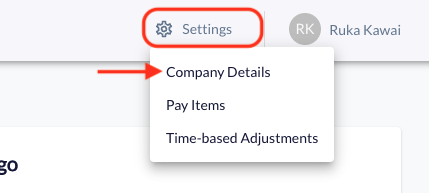
Access the payroll platform. On the top right corner, click on Settings > Company Details > Statutory deduction configuration settings.
You can configure when statutory deductions should be applied for each of the following:
SSS
PhilHealth
Pag-IBIG
Each statutory type can be configured independently. The available options are:
First Half
Second Half
Both Halves — Split Equally
Both Halves — Based on Each Pay Run's Salary
How does First Half deduction work?
If a statutory deduction is configured for First Half, the applicable employee contribution is deducted from the employee's First Half pay run.
Because statutory contributions are generally calculated on a monthly basis, the employee's full-month salary may not yet be known when the First Half pay run is created.
To derive the applicable contribution, the system will therefore make an informed projection of the employee's Second Half salary by referring to various factors, such as the salary in the First Half pay run, termination dates etc. The estimated First and Second Half salaries are then used to project the employee's full-month salary and determine the applicable statutory contribution to deduct in the First Half.
For example, assuming an employee earns ₱15,000 in the First Half, the system may project:
First Half salary: ₱15,000
Estimated Second Half salary: ₱15,000
Projected full-month salary: ₱30,000
The applicable statutory contribution is then calculated based on the projected ₱30,000 monthly salary and deducted from the First Half pay run.
If the employee's actual Second Half salary subsequently differs from the First Half salary due to items such as unpaid leave, salary adjustments, variable earnings, joining or leaving employment, the projected monthly salary used during the First Half may differ from the employee's actual full-month salary.
How does Second Half deduction work? (Recommended)
If a statutory deduction is configured for Second Half, no statutory deduction is made during the First Half pay run.
When the Second Half pay run is processed, the system can refer to the employee's earnings from both the First and Second Half pay runs to determine the employee's full-month salary and calculate the applicable statutory contribution.
For example, assuming an employee earns the following wages:
First Half salary: ₱15,000
Second Half salary: ₱13,000
Actual full-month salary: ₱28,000
With the statutory deduction configured for Second Half, the system can use the employee's actual ₱28,000 full-month salary when calculating the applicable contribution. The full employee contribution is then deducted from the Second Half pay run.
Why is Second Half generally more accurate for statutory deductions?
Where an employer's payroll practice allows statutory deductions to be consolidated at the end of the month, configuring the deduction for Second Half generally provides the most accurate monthly calculation.
This is because, by the time the Second Half pay run is processed, the employee's earnings for both halves of the month are available. The system can therefore calculate the statutory contribution using the employee's confirmed full-month salary, rather than estimating future earnings.
This is particularly important where an employee's salary is not identical between the First and Second Half.
Examples include:
Unpaid leave
Overtime or other variable earnings
Salary adjustments
Mid-month salary changes
New joiners
Terminating employees
Other changes affecting the employee's contributable salary
How does Both Halves — Split Equally work?
With Both Halves — Split Equally, the system projects the employee's full-month salary during the First Half pay run, calculates the applicable monthly statutory contribution, and initially splits the projected contribution equally between the two halves.
Once the First Half pay run has been processed, however, the statutory deduction already taken in the First Half is fixed. It will not be recalculated or changed retrospectively if the employee's actual salary for the Second Half subsequently changes.
When the Second Half pay run is created, the system recalculates the employee's statutory contribution based on the actual full-month salary. It then deducts the remaining contribution after taking into account the amount already deducted in the First Half.
For example, assuming an employee has a basic monthly salary of ₱30,000.
During the First Half, the system projects:
First Half salary: ₱15,000
Projected Second Half salary: ₱15,000
Projected full-month salary: ₱30,000
Assume the applicable monthly SSS employee contribution is ₱1,500, the contribution deducted in the first half is ₱750
If the employee's actual full-month salary remains ₱30,000, the Second Half deduction remains ₱750.
However, if there are changes to Second Half salary:
First Half salary: ₱15,000
Actual Second Half salary: ₱11,034.48
Actual full-month salary: ₱26,034.48
Assume the applicable SSS contribution based on the actual full-month salary is now ₱1,300.
The system does not change the First Half deduction from ₱750 to ₱650. Instead, it calculates the remaining amount to be deducted during the Second Half:
₱1,300 total contribution − ₱750 already deducted = ₱550
The final deductions are therefore:
| Pay Run | SSS Deduction |
|---|---|
| First Half | ₱750 |
| Second Half | ₱550 |
| Total | ₱1,300 |
This ensures that deductions already processed in an earlier pay run remain unchanged, while the Second Half pay run adjusts for any difference between the projected and actual monthly statutory contribution.
How does Both Halves — Based on Each Pay Run's Salary work?
With Both Halves — Based on Each Pay Run's Salary, the statutory contribution is calculated separately for each pay run based on the salary earned within that pay run. The system does not first calculate one full-month contribution and divide it between the two halves.
For example, assume an employee earns:
First Half salary: ₱12,000
Second Half salary: ₱18,000
The system assesses the applicable contribution separately using:
- First Half: ₱12,000 salary (₱600)
- Second Half: ₱18,000 salary (₱900)
The resulting deduction in each pay run will therefore depend on the applicable statutory contribution calculation for the salary within that particular run. This means the amount deducted in each half may not be equal.
When can Statutory Deduction settings be changed?
Once the first pay run of the month has been created, the Statutory Deduction Schedule settings for that month are locked. This ensures that different pay runs within the same pay month do not use conflicting statutory deduction configurations.
For example, if the September First Half pay run has already been created, the SSS, PhilHealth, and Pag-IBIG deduction schedules cannot be changed while the existing September pay runs remain.
To change the deduction schedule within the same month:
Delete all existing pay runs for the current pay month.
Update the Statutory Deduction Schedule under Company Details.
Recreate the relevant pay runs.
The newly created pay runs will then use the updated settings.
Was this article helpful?
That’s Great!
Thank you for your feedback
Sorry! We couldn't be helpful
Thank you for your feedback
Feedback sent
We appreciate your effort and will try to fix the article